Anyone for Vegetarian Athletics?


The Vegetarian Brothers


Whilst, trawling through the autobiographical section of the personal papers of Maurice Wilkins I came across a remarkable pamphlet,"Vegetarian Athletics (What they prove and disprove)" by Henry Light, produced by the Vegetarian Society, features the semi-naked vegetarian wrestling champions, S V and E H Bacon mid-bout.


The pamphlet was part of the collected papers of Edgar Wilkins, Maurice's father, who was himself a committed vegetarian and keen exerciser. Trained as a doctor at Trinity College Dublin, he later concentrated on public health and preventative medicine and had a life long interest in the effects of diet and exercise on health. His papers were collected as part of Maurice Wilkins' autobiographical research, originally to provide the reader with a framework of how family characteristics were passed down through the generations.

In the first page of 'Vegetarian Athletics', Henry Light dispels the myth that vegetarians can "merely exist" but can be lusty and thrive. He states that there is a "great paucity of vegetarian athletes as compared with the innumerable host of flesh-eaters in the land, and thus realise that the numerical odds against us are analogous to those of a small village pitted against the entire nation. How often should we expect that little village to win? Once in a thousand years perhaps. Yet we vegetarian, competing for scarcely more than a thousand weeks, have secured amongst our innumerable triumphs the following formidable list of WORLD and NATIONAL RECORDS and CHAMPIONSHIPS [followed by a list of athletes and their achievements]"


The twelve page pamphlet makes interesting reading not only through its content but its wonderful use of language especially when describing non-vegetarians as "flesh-eaters" or lines such as "before coming a vegetarian he was an epileptic". It provides examples from recent times of world and national record holding vegetarian athletes similar to the wrestling brothers on the front. In some cases it provides a detailed break down of their diet such as Eustace Davies, mountain climber:


"Whilst training, except when visiting friends, his food consisted chiefly of:

Breakfast: Bread and butter, hot milk, potato, green salad and oil, and sometimes an egg.

Lunch and dinner: Cheese, Bread, butter, potatos, green salad and oil, milk-pudding, and stewed fruit and cream. 

The food used during the performance itself was principally of a liquid nature. For the first ten hours it was egg and milk. Thereafter milk and soda, lemon water, some tea and egg, and once or twice milky tea at inns in the valleys. Also stewed fruit and cream and milk pudding at three places; and two oranges." 

Davies was quoted by the author saying: "I owe you a great debt of gratitude; your advice was acted upon in toto, and I do not know of any other system of feeding on which I could have done the trick".  

The pamphlet is interspersed with general advice on the merits and practicalities of vegetarianism and also the  initial difficulties a former "flesh-eating" athlete might encounter when he first switches to vegetarianism. Henry Light at one point warns: "Before starting on a vegetarian system of living, one should be thoroughly convinced not only of its superior ethical value but its practicability, and be thoroughly determined after starting, for the mind has so great an influence over the body that the slightest wavering or doubt usually spells failure, and failure of course brings discredit upon the cause and oneself".


KCL and the Foundations of Modern Genetics: The digitisation of the papers of Maurice Wilkins ...

KCL and the Foundations of Modern Genetics: The digitisation of the papers of Maurice Wilkins ...: Welcome to the new archive project blog relating to the digitisation of material from the papers of Maurice Wilkins and the Biophysics Depar...

KCL Archives has a new blog for all your DNA archives digitisation needs

King's College London Archives have started a new blog based on our digitisation of the papers of Maurice Wilkins and the Biophysics Department. This project is part of the Wellcome Digital Library initiative to bring together historically significant collections relating to "Modern Genetics and its Foundations". More about the project can be read on the site's first blog post: http://kclfoundationsofmoderngenetics.blogspot.com/2012/03/digitisation-of-papers-of-maurice.html

Thanks again to all those who have read and enjoyed this blog site. We hope that the new blog will be an interesting read as well and will continue to mine the archives for interesting stories and images relating to the the discovery of DNA.

So long and thanks for all the hits!

  Sadly, this will be the last post on the DNA and Social Responsibility blog as the project is nearing an end. I hope those who have read the blog have taken away an interest in the life and career of Maurice Wilkins and how the papers that are held in the King's College Archive are a fantastic resource for future research in not only the history of genetics but also the wider role played by science in society in the twentieth century. Helping to catalogue this collection has been an enjoyable experience as it has introduced me to the delights of x-ray diffraction photographs; Fourier Transforms and Electron Density Maps not to mention the myriad political scientific groups most notably, BSSRS.

As a finale,I would like to sign off by sharing my favourite Wilkins' laboratory doodle. Cartoon is somewhat anarchic but does convey how science for Maurice Wilkins is a creative enterprise that still retained a slight hint of alchemy in the proceedings. 

'Ways out of the Arms Race": The Second International Scientists' Congress

During the 1980's, Maurice Wilkins spent a significant amount of time promoting and campaigning on disarmament and development issues. While maintaining his long running membership of British Pugwash, Campaign for Nuclear Disarmament (CND), British Society for Social Responsibility in Science (BSSRS) and the World Federation of Scientific Worker's (WFSW), he also became honorary President of the Food and Disarmament International (FDI) organisation and an active member of scientists' against nuclear arms (SANA). It was the later that led to his involvement in the 'Ways out of the Arms Race' Second International Scientists' Congress held at Imperial College London, on the 2-4 December 1988. The conference aim was for imminent scientists from across the globe to discuss papers on nuclear, chemical and biological disarmament. It succeeded in doing so with the added benefit of providing political pressure by mobilising its attendance to protest on two concurrent political events: the abduction and imprisonment of the Israeli nuclear plant technician, Dr Mordechai Vanunu and the poison gas attacks by the Iraqi Army in Halabja in 1988. Evidence of the petitions and demonstrations are recorded in the papers of Maurice Wilkins which includes candid replies to him from representatives of the Israeli and Iraqi governments.


Campaign relating to Dr Mordechai Vanunu

Dr Mordechai Vanunu, was a former nuclear technician at the Negev Nuclear Research Center from 1976-1985. In 1986, whilst in Sydney, Australia, he met a Sunday Times journalist and revealed knowledge of the Israeli nuclear weapons programme before accompanying the journalist to London. It was during his time in London that the Israeli Government decided to capture Vanunu and hatched a plan to remove him from UK territory by getting an undercover Mosad agent to pretend to be an American tourist, named Cindy who Vanunu agreed to accompany to Rome. In Rome he was drugged and freighted back to Israeli where he was imprisoned for treason and confined for 18 years, including eleven years of solitary confinement.

 During the Congress, a demonstration was organised to the Israeli Embassy in London where a petition would be handed in asking for clemency for Mr Vananu. A significant number of the delegates signed the petition including fellow Nobel Prize winners, Dorothy Hodgkin and Joseph Rotblat.


The following summer, Wilkins received a reply from the Israeli Government's Ministry of Justice:


Campaign condemning gas attacks on Kurdish civilians

The Halabja massacre is now well known event due in part to the build up to the Second Iraq war and the fall of Sadam Hussain's regime. However, at the time of their occurence the international response was ambiguous with some international media coverage and western governmental officials siding with the official Iraqi line that no poison gas attacks were used against the Kurdish people. Wilkins sent a letter to the Iraqi ambassador in London and recieved a detailed reply with a number of attachments. The letter provides evidence of the divided media coverage and general lack of facts available allowing for passionate denial of any use of chemical weapons and a dismissal of the claims as part of an anti-Iraqi conspiracy. 


Example of the Second International Scientists' Congress petition against the Iraqi government after the chemical attack on the Kurdish city of Halabja.


Objectifying DNA

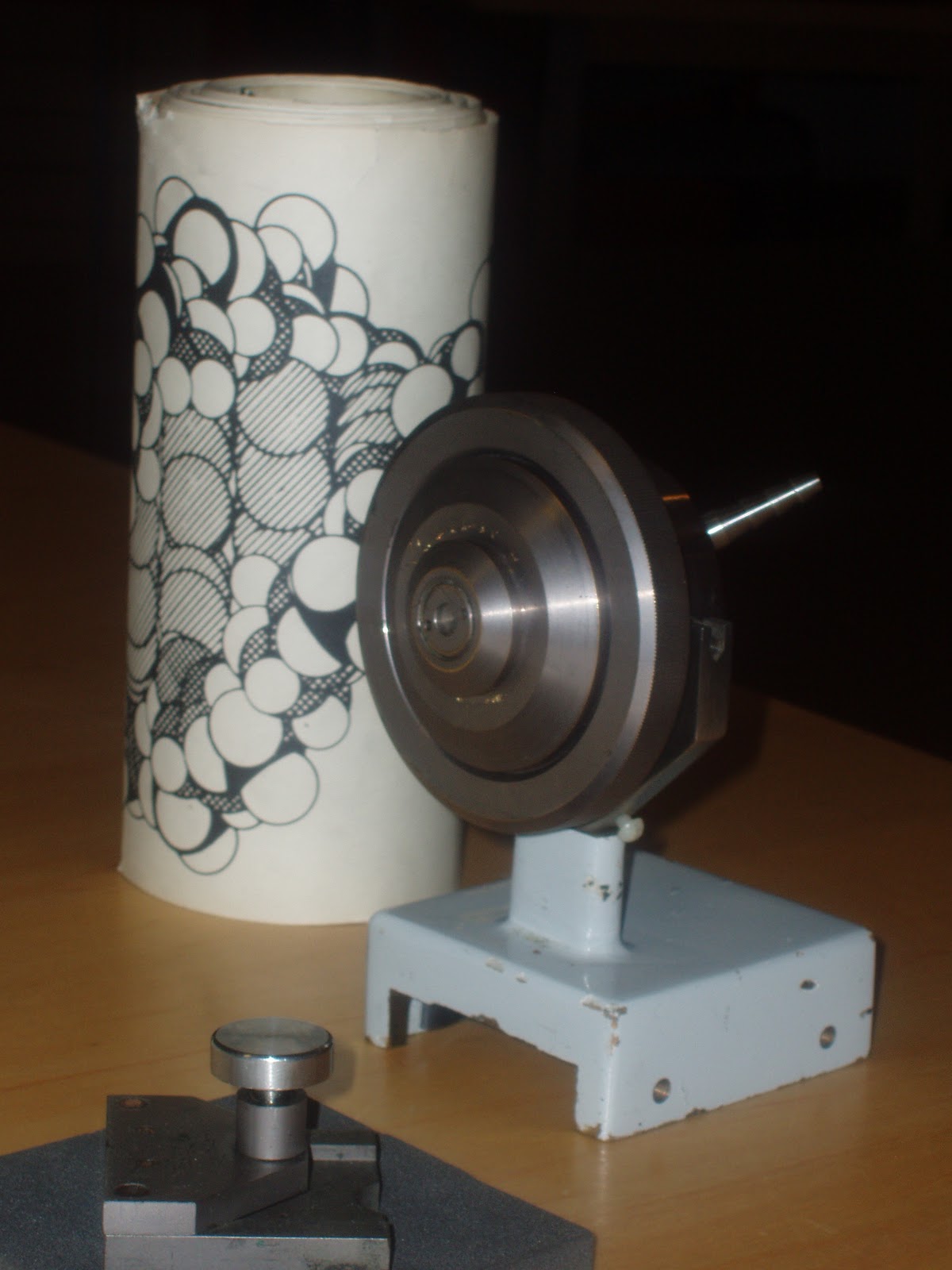
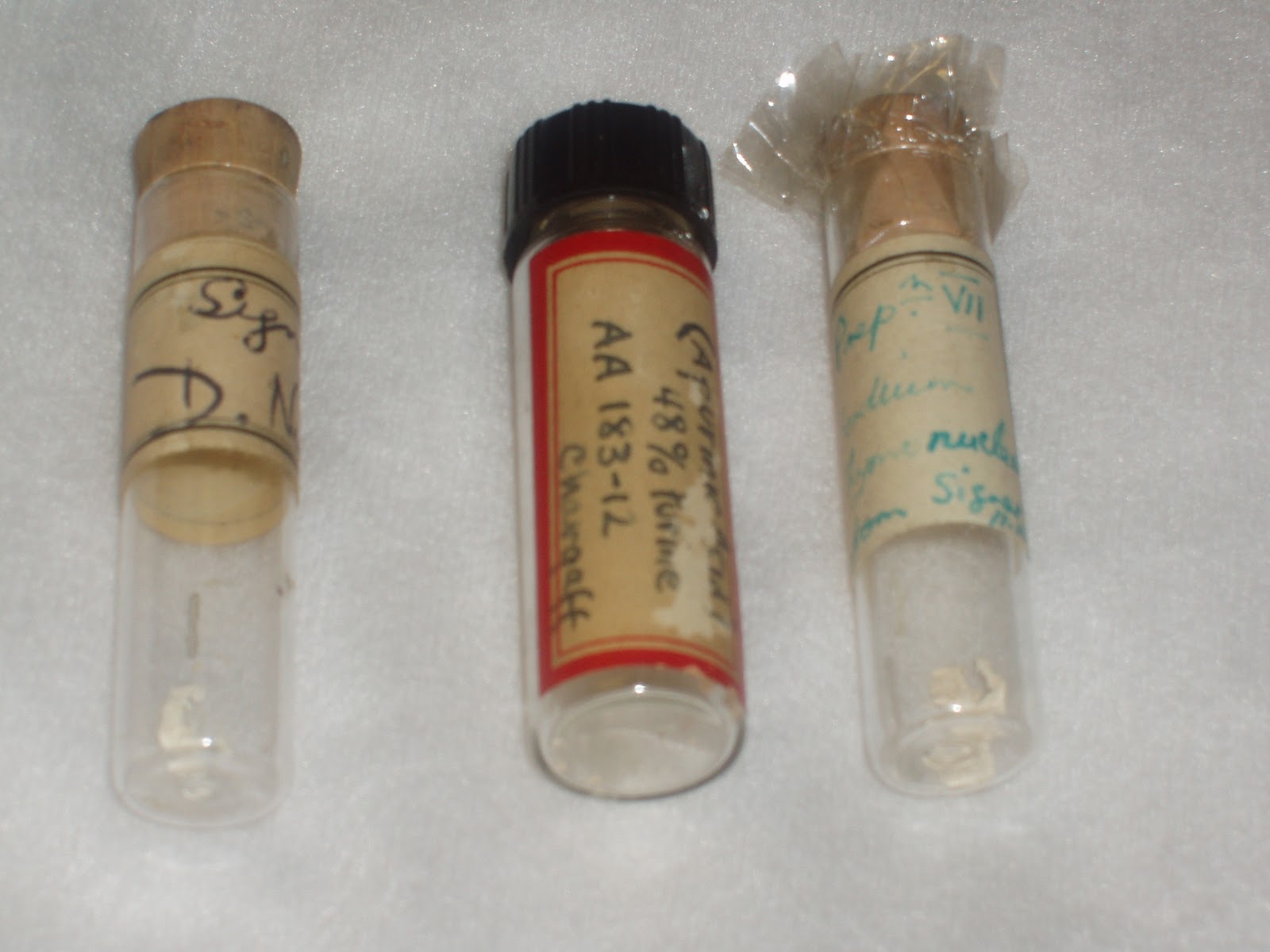
  The artefacts within the combined papers of the Maurice Wilkins and Biophysics collection include some of the most striking items in our holdings. Correspondence may have warmth and wit and the experimental notebooks may actually give the how and why but nothing beats the sheer visual punch of the DNA wire model or a X-ray diffraction camera. The artefacts are all the more impressive due to the diversity that the collection holds. Highlights include: original DNA fibres supplied by the Swiss biochemist, Rudolf Signer, which were the main source of DNA used in the X-ray diffraction experiments by Rosalind Franklin and Raymond Gosling; several X-ray diffraction cameras including the micro camera used to obtain "Photo 51", the picture of B structure DNA that so sharply showed a helical structure of DNA; DNA models and diagrams that the Biophysics Unit used to construct and refine more detailed models of DNA, with the pride and joy being the several metre long roll of the DNA molecular model ceremoniously nicknamed the "DNA toilet paper". These are a few of our favourite things and they are joined by many other items that directly relate to DNA and previous microscopic research carried out on the subject.


A few of the DNA related artefacts at King's Archives such as the single fibre X-ray camera used by Rosalind Franklin, glass vials containing original DNA samples used in the X-ray diffraction experiments, DNA diagram and Biophysics photo index


The collection has a remarkable degree of preserved DNA samples from the 1950s that not only include the Rudolf Signer Calf Thymus DNA that produced excellent B configuration X ray patterns sample but also DNA samples prepared from other scientists such as Erwin Chargaff and Leonard Hamilton which used a variety of other DNA sources like bacterial cultures and human DNA.

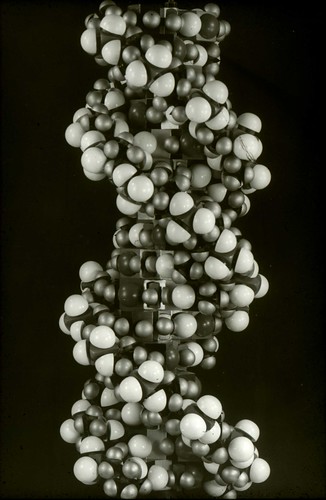
Image of a molecular model of DNA reproduced for the 40th anniversaryof the discovery of the double helix at King's College London

Two new Flickr sets taken from 35mm mounted slide series. Only a small sample of over thousand images that were digitally captured over the last two months. Highlights include high quality images of Rosalind Franklin, x-ray diffraction images and models of DNA and images relating to Maurice Wilkins' involvement in the Campaign for Nuclear Disarmament.