KCL and the Foundations of Modern Genetics: Maurice Wilkins and the ultrasonic pursuit of the ...
KCL and the Foundations of Modern Genetics: Maurice Wilkins and the ultrasonic pursuit of the ...: The scientific career of Maurice Wilkins did not solely focus on the structure and refinement of DNA. Having begun reading Physics a...
KCL and the Foundations of Modern Genetics: Selecting Material for Digitisation: Glass Slides ...
KCL and the Foundations of Modern Genetics: Selecting Material for Digitisation: Glass Slides ...: Part of my role for the project is to select relevant material from the Biophysics collection for digitisation. The Biophysics collectio...
KCL and the Foundations of Modern Genetics: The digitisation of the papers of Maurice Wilkins ...
KCL and the Foundations of Modern Genetics: The digitisation of the papers of Maurice Wilkins ...: Welcome to the new archive project blog relating to the digitisation of material from the papers of Maurice Wilkins and the Biophysics Depar...
KCL Archives has a new blog for all your DNA archives digitisation needs
King's College London Archives have started a new blog based on our digitisation of the papers of Maurice Wilkins and the Biophysics Department. This project is part of the Wellcome Digital Library initiative to bring together historically significant collections relating to "Modern Genetics and its Foundations". More about the project can be read on the site's first blog post: http://kclfoundationsofmoderngenetics.blogspot.com/2012/03/digitisation-of-papers-of-maurice.html
Thanks again to all those who have read and enjoyed this blog site. We hope that the new blog will be an interesting read as well and will continue to mine the archives for interesting stories and images relating to the the discovery of DNA.
So long and thanks for all the hits!
Sadly, this will be the last post on the DNA and Social Responsibility blog as the project is nearing an end. I hope those who have read the blog have taken away an interest in the life and career of Maurice Wilkins and how the papers that are held in the King's College Archive are a fantastic resource for future research in not only the history of genetics but also the wider role played by science in society in the twentieth century. Helping to catalogue this collection has been an enjoyable experience as it has introduced me to the delights of x-ray diffraction photographs; Fourier Transforms and Electron Density Maps not to mention the myriad political scientific groups most notably, BSSRS.
As a finale,I would like to sign off by sharing my favourite Wilkins' laboratory doodle. Cartoon is somewhat anarchic but does convey how science for Maurice Wilkins is a creative enterprise that still retained a slight hint of alchemy in the proceedings.

'Ways out of the Arms Race": The Second International Scientists' Congress
During the 1980's, Maurice Wilkins spent a significant amount of time promoting and campaigning on disarmament and development issues. While maintaining his long running membership of British Pugwash, Campaign for Nuclear Disarmament (CND), British Society for Social Responsibility in Science (BSSRS) and the World Federation of Scientific Worker's (WFSW), he also became honorary President of the Food and Disarmament International (FDI) organisation and an active member of scientists' against nuclear arms (SANA). It was the later that led to his involvement in the 'Ways out of the Arms Race' Second International Scientists' Congress held at Imperial College London, on the 2-4 December 1988. The conference aim was for imminent scientists from across the globe to discuss papers on nuclear, chemical and biological disarmament. It succeeded in doing so with the added benefit of providing political pressure by mobilising its attendance to protest on two concurrent political events: the abduction and imprisonment of the Israeli nuclear plant technician, Dr Mordechai Vanunu and the poison gas attacks by the Iraqi Army in Halabja in 1988. Evidence of the petitions and demonstrations are recorded in the papers of Maurice Wilkins which includes candid replies to him from representatives of the Israeli and Iraqi governments.
Campaign relating to Dr Mordechai Vanunu
Dr Mordechai Vanunu, was a former nuclear technician at the Negev Nuclear Research Center from 1976-1985. In 1986, whilst in Sydney, Australia, he met a Sunday Times journalist and revealed knowledge of the Israeli nuclear weapons programme before accompanying the journalist to London. It was during his time in London that the Israeli Government decided to capture Vanunu and hatched a plan to remove him from UK territory by getting an undercover Mosad agent to pretend to be an American tourist, named Cindy who Vanunu agreed to accompany to Rome. In Rome he was drugged and freighted back to Israeli where he was imprisoned for treason and confined for 18 years, including eleven years of solitary confinement.
During the Congress, a demonstration was organised to the Israeli Embassy in London where a petition would be handed in asking for clemency for Mr Vananu. A significant number of the delegates signed the petition including fellow Nobel Prize winners, Dorothy Hodgkin and Joseph Rotblat.


Campaign relating to Dr Mordechai Vanunu
Dr Mordechai Vanunu, was a former nuclear technician at the Negev Nuclear Research Center from 1976-1985. In 1986, whilst in Sydney, Australia, he met a Sunday Times journalist and revealed knowledge of the Israeli nuclear weapons programme before accompanying the journalist to London. It was during his time in London that the Israeli Government decided to capture Vanunu and hatched a plan to remove him from UK territory by getting an undercover Mosad agent to pretend to be an American tourist, named Cindy who Vanunu agreed to accompany to Rome. In Rome he was drugged and freighted back to Israeli where he was imprisoned for treason and confined for 18 years, including eleven years of solitary confinement.
During the Congress, a demonstration was organised to the Israeli Embassy in London where a petition would be handed in asking for clemency for Mr Vananu. A significant number of the delegates signed the petition including fellow Nobel Prize winners, Dorothy Hodgkin and Joseph Rotblat.

The following summer, Wilkins received a reply from the Israeli Government's Ministry of Justice:


Campaign condemning gas attacks on Kurdish civilians
The Halabja massacre is now well known event due in part to the build up to the Second Iraq war and the fall of Sadam Hussain's regime. However, at the time of their occurence the international response was ambiguous with some international media coverage and western governmental officials siding with the official Iraqi line that no poison gas attacks were used against the Kurdish people. Wilkins sent a letter to the Iraqi ambassador in London and recieved a detailed reply with a number of attachments. The letter provides evidence of the divided media coverage and general lack of facts available allowing for passionate denial of any use of chemical weapons and a dismissal of the claims as part of an anti-Iraqi conspiracy.
 |
| Example of the Second International Scientists' Congress petition against the Iraqi government after the chemical attack on the Kurdish city of Halabja. |


Objectifying DNA
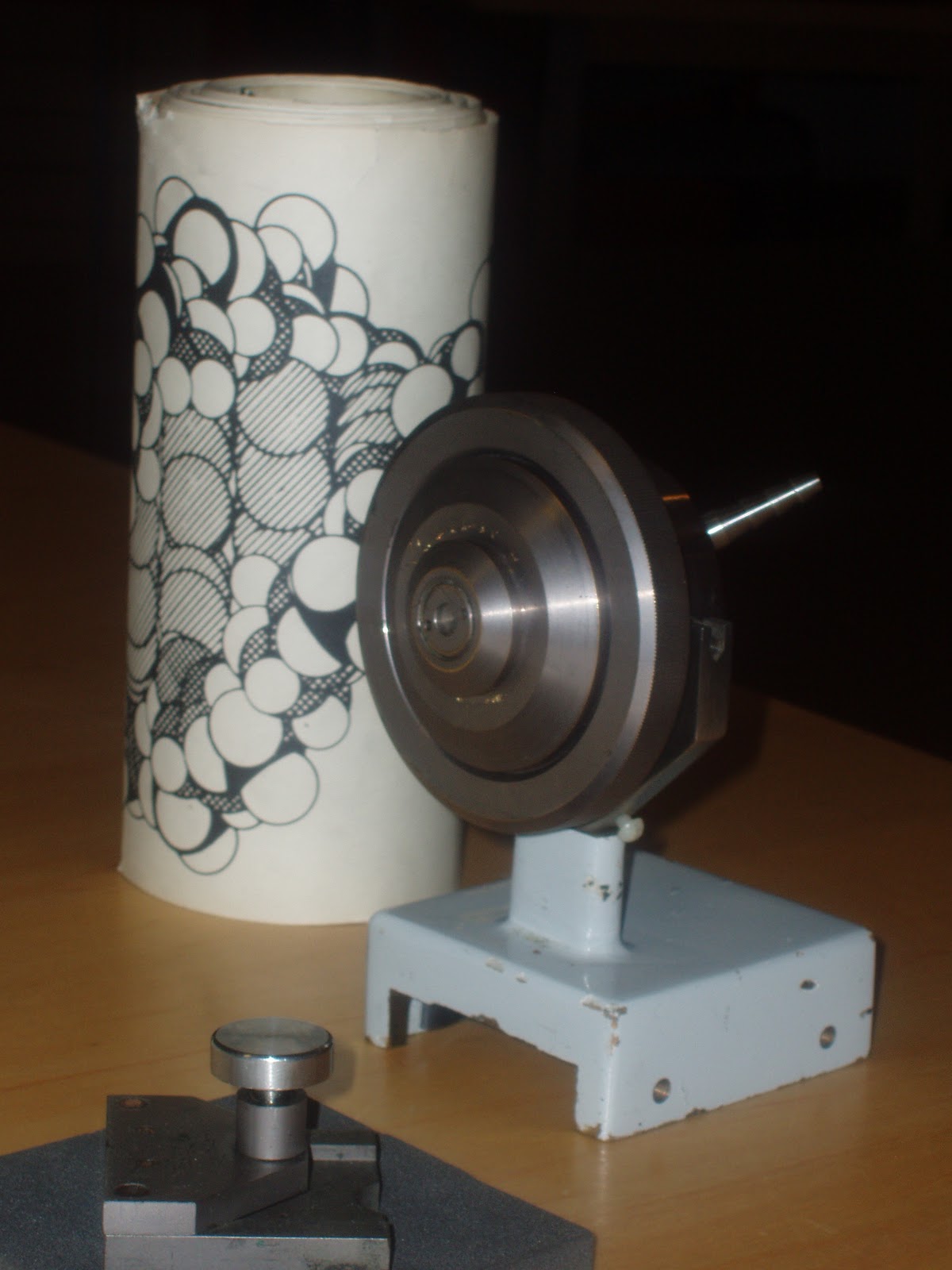
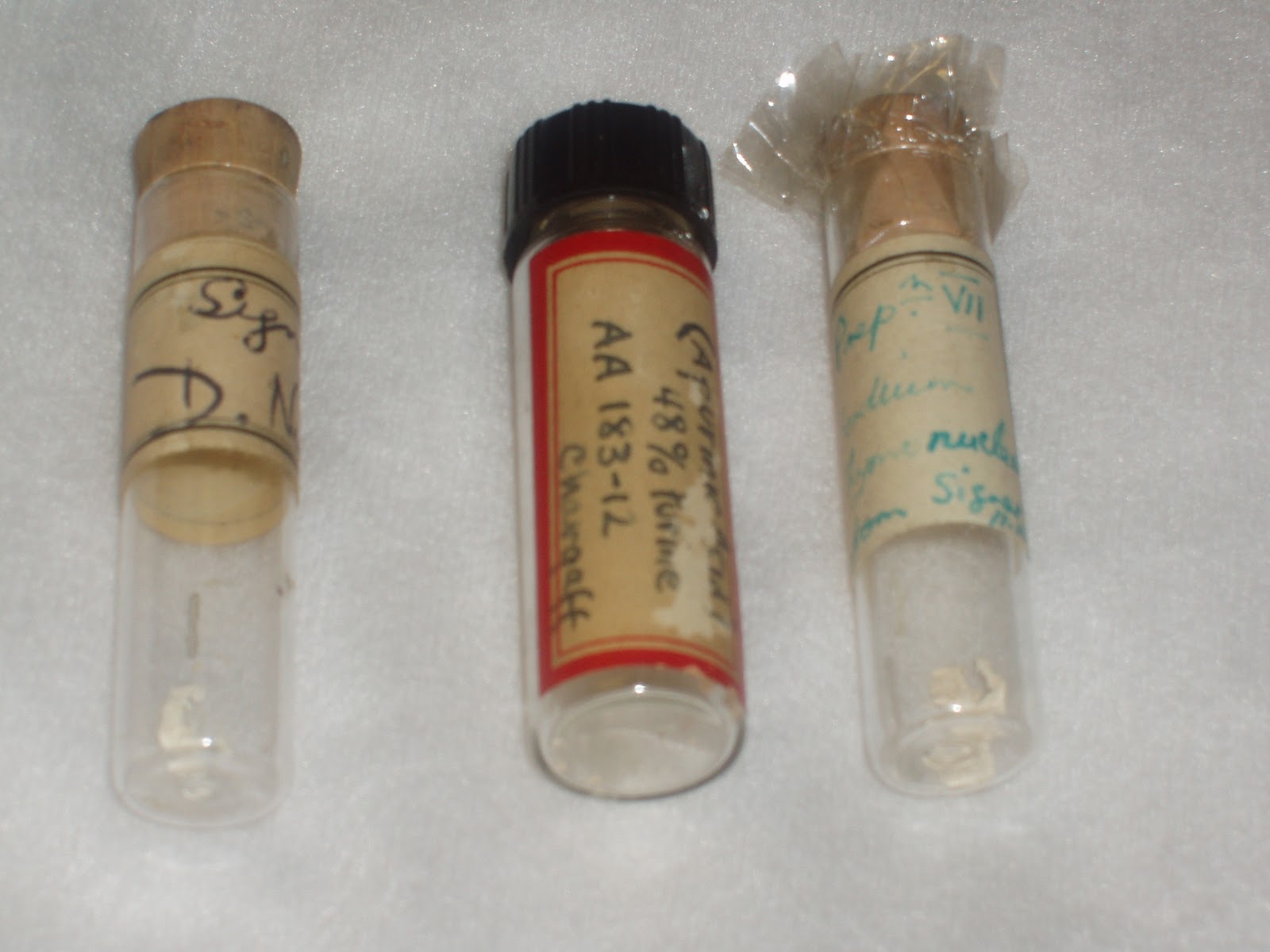
The artefacts within the combined papers of the Maurice Wilkins and Biophysics collection include some of the most striking items in our holdings. Correspondence may have warmth and wit and the experimental notebooks may actually give the how and why but nothing beats the sheer visual punch of the DNA wire model or a X-ray diffraction camera. The artefacts are all the more impressive due to the diversity that the collection holds. Highlights include: original DNA fibres supplied by the Swiss biochemist, Rudolf Signer, which were the main source of DNA used in the X-ray diffraction experiments by Rosalind Franklin and Raymond Gosling; several X-ray diffraction cameras including the micro camera used to obtain "Photo 51", the picture of B structure DNA that so sharply showed a helical structure of DNA; DNA models and diagrams that the Biophysics Unit used to construct and refine more detailed models of DNA, with the pride and joy being the several metre long roll of the DNA molecular model ceremoniously nicknamed the "DNA toilet paper". These are a few of our favourite things and they are joined by many other items that directly relate to DNA and previous microscopic research carried out on the subject.
 |
| A few of the DNA related artefacts at King's Archives such as the single fibre X-ray camera used by Rosalind Franklin, glass vials containing original DNA samples used in the X-ray diffraction experiments, DNA diagram and Biophysics photo index |
 |
| The collection has a remarkable degree of preserved DNA samples from the 1950s that not only include the Rudolf Signer Calf Thymus DNA that produced excellent B configuration X ray patterns sample but also DNA samples prepared from other scientists such as Erwin Chargaff and Leonard Hamilton which used a variety of other DNA sources like bacterial cultures and human DNA. |
Image of a molecular model of DNA reproduced for the 40th anniversaryof the discovery of the double helix at King's College London
Two new Flickr sets taken from 35mm mounted slide series. Only a small sample of over thousand images that were digitally captured over the last two months. Highlights include high quality images of Rosalind Franklin, x-ray diffraction images and models of DNA and images relating to Maurice Wilkins' involvement in the Campaign for Nuclear Disarmament.

"Dear M": the transatlantic DNA collaboration of Maurice Wilkins and Leonard Hamilton
This week's post calls attention to a series of correspondence written in the 1950s that documents the DNA research carried by Wilkins and his group at King's College London from 1953 to1960. The correspondence is with Dr Leonard D Hamilton, a British medical researcher and pathologist based in the United States who worked for the Sloan Kettering Institute for Cancer Research and later the Brookhaven National Laboratory. He provided DNA samples to Wilkins at King's from 1952 into the 1960s. As my title suggests the two were firm friends and their letters are refreshingly candid. Although these letters do not document the breakthrough research on the structure of the double helix like the similar correspondence between Wilkins and Crick they do give us a good picture of how Wilkins coped with the news and life thereafter.
DNA Samples: Supply and Demand
In 1953, Leonard Hamilton became the principal provider of DNA for the King's team. Samples had previously been provided by a host of other international scientists such as Rudolf Signer, Erwin Chargaff and Harriet Ephrussi and there was a great pressure to produce better DNA samples now it had been established that DNA was the basis of genes.Wilkins and his team were also under pressure to provide a more detailed double helical model to confirm that the structure was correct and not an equally valid alternative structure.
In the above letter, Wilkins shows his excitement over the diffraction image obtained using the S-180 mouse sarcoma sample. He also expresses the need for greater quantities and variant salts and solutions that becomes a constant theme of this correspondence, as this quotation from a letter from Wilkins on the 9 June 1954 reveals:
The problem of the supply of demand of DNA were exacerbated by the trans-Atlantic nature of the partnership. Communication was the biggest issue. Before the days of global mass-communication, the main medium for communication was by letter or telegram (international telephone calls had only recently been introduced and were very expensive). The frustration was felt on both sides of the Atlantic especially with the additional pressures of journal and conference deadlines. Despite these stresses, they made progress as this quote from Wilkins on 5 November 1954 states:
Living in the Shadow of the Watson-Crick Model
One of the reasons why these letters make compelling reading is the scattered references to the discovery of the Double Helix. In the letters we get a contemporary commentary on the initial impact of the discovery and personal opinions on some of the key characters such as Francis Crick, James Watson and Rosalind Franklin. Of particular interest is the response of Hamilton who considered that Wilkins and King's College London Biophysics Unit had been hard done by Watson and Crick's model.
From the correspondence, it is clear that the battles and wounds caused by the discovery are still fresh but the scientific interest in the findings ( such as the journal Scientific American in Figure 2) are already calling for a narrative of the discovery. Hamilton's repeated opposition to calling the double helix the Watson-Crick model is an example of this increasing scientific interest and his own attempts to inform the American scientific community of the role that King's Biophysics Unit played in its creation.
Wilkins' own initial thoughts and feelings were somewhat more ambigious. For example, his assessment of Francis Crick in the letter shown in Figure 1 states:
His reaction is in line with his famous letter to Crick on hearing the discovery where he called Crick and Watson a couple of "old rogues" but accepted the model gracefully. Yet in this letter he does admit a degree of resentment over the Crick's "careerist" tendencies but not enough to irreprecibly damage their friendship.
Finals thoughts
The correspondence between these two friends is of great reading for anyone interested in the story of the double helix and the DNA research carried out at King's College London. By being both a commentary and account of the DNA research undertaken at King's in the fifties the letters acts as an informal guide to the work being carried out and excellent source of information of the different DNA salts and samples. For me, however, the best aspect of the letters is the openess and informality that Wilkins shares with his friend about his life and research.
Final words
DNA Samples: Supply and Demand
In 1953, Leonard Hamilton became the principal provider of DNA for the King's team. Samples had previously been provided by a host of other international scientists such as Rudolf Signer, Erwin Chargaff and Harriet Ephrussi and there was a great pressure to produce better DNA samples now it had been established that DNA was the basis of genes.Wilkins and his team were also under pressure to provide a more detailed double helical model to confirm that the structure was correct and not an equally valid alternative structure.
 |
| Figure 1: Photocopy of a letter from Wilkins to Hamilton, dated 28 May 1953: Wilkins thanks Hamilton for the DNA sample taken from a mouse sarcoma and generally expresses an eagerness to press on with further DNA research. |
In the above letter, Wilkins shows his excitement over the diffraction image obtained using the S-180 mouse sarcoma sample. He also expresses the need for greater quantities and variant salts and solutions that becomes a constant theme of this correspondence, as this quotation from a letter from Wilkins on the 9 June 1954 reveals:
"As I thought I made clear, what we need is better DNAs and hence I was very disappointed to find all the samples you sent recently were no better than the usual quality. We have not the time to test laboriously numerous samples in the hope one might be good. The three dry samples were have had already and those in solution, owning to a lack of warning, arrived at this end and were held at the airport for several days and appear to have deteriorated".
The problem of the supply of demand of DNA were exacerbated by the trans-Atlantic nature of the partnership. Communication was the biggest issue. Before the days of global mass-communication, the main medium for communication was by letter or telegram (international telephone calls had only recently been introduced and were very expensive). The frustration was felt on both sides of the Atlantic especially with the additional pressures of journal and conference deadlines. Despite these stresses, they made progress as this quote from Wilkins on 5 November 1954 states:
"The 10 week exposure came off today and is a great success. it is one of the biggest improvements we have ever had in A pictures and is very much better than the best before. Will send a copy soon and I hope I will spur you on to even better things...Good old Leonard!"
Living in the Shadow of the Watson-Crick Model
One of the reasons why these letters make compelling reading is the scattered references to the discovery of the Double Helix. In the letters we get a contemporary commentary on the initial impact of the discovery and personal opinions on some of the key characters such as Francis Crick, James Watson and Rosalind Franklin. Of particular interest is the response of Hamilton who considered that Wilkins and King's College London Biophysics Unit had been hard done by Watson and Crick's model.
 |
| Figure 2: Letter from Leonard Hamilton to Wilkins dated October 12 1954: In this letter, Hamilton describes a visit from Rosalind Franklin and also his plan to air off a little "pro-Wilkins propaganda!" at a nucleic acids conference. |
Wilkins' own initial thoughts and feelings were somewhat more ambigious. For example, his assessment of Francis Crick in the letter shown in Figure 1 states:
"Taken the Watson Crick model with a grain of salt. Francis is quite certain he can solve all the problems of the universe by pure thought and his lack of facts had lost him many friends temporarily until he recovers from DNA hysteria. I am very fond of Francis but he can be a bit much at times and he can be a ruthless careerist when he thinks it suits him. but keep that quiet to ourselves. We both like him a lot so there is no harm saying this to you".
His reaction is in line with his famous letter to Crick on hearing the discovery where he called Crick and Watson a couple of "old rogues" but accepted the model gracefully. Yet in this letter he does admit a degree of resentment over the Crick's "careerist" tendencies but not enough to irreprecibly damage their friendship.
Finals thoughts
The correspondence between these two friends is of great reading for anyone interested in the story of the double helix and the DNA research carried out at King's College London. By being both a commentary and account of the DNA research undertaken at King's in the fifties the letters acts as an informal guide to the work being carried out and excellent source of information of the different DNA salts and samples. For me, however, the best aspect of the letters is the openess and informality that Wilkins shares with his friend about his life and research.
 |
| Figure 3: Leonard Hamilton and Maurice Wilkins together in the 1960s. |
Final words
"Do please reply soon. The nature of the gene depends on it. What piffle. M"
DNA on Display: Strandlines community visits King's Archive
On 23 February 2011, King's College London Archives hosted a local event organised by the Strandlines Digital Community. A diverse group spent the afternoon exploring many of the treasures of our archives including artifacts and documents from our DNA collection. Information and anecdotes about the collection were provided by Patricia Methven, Head of King's College Archives and senior archivist Geoff Browell. A project blog on the Strandlines website provides a more comprehensive coverage of the day plus feedback from a number of visitors (http://www.strandlines.net/blog/archives-afternoon-23rd-february-2011).
As the DNA & Social Responsibility project assistant, I was delighted to see the level of interest and enthusiasm for the DNA collection, whether it was copies of 'Photo 51' or the 'wire model of DNA'. Not only were people awe-struck by the beauty and importance of DNA artefacts and photographs but they were also charmed by the more personal items of our collection such as 'Radium Island', the boyhood adventure story by Maurice Wilkins. Overall, it was good to see that visitors come away appreciating the long tradition of scientific innovation at King's and the beneficial role that the archives can play in the local community.
 |
| Strandlines event at King's College London archives on the 23 February 2011 |
As the DNA & Social Responsibility project assistant, I was delighted to see the level of interest and enthusiasm for the DNA collection, whether it was copies of 'Photo 51' or the 'wire model of DNA'. Not only were people awe-struck by the beauty and importance of DNA artefacts and photographs but they were also charmed by the more personal items of our collection such as 'Radium Island', the boyhood adventure story by Maurice Wilkins. Overall, it was good to see that visitors come away appreciating the long tradition of scientific innovation at King's and the beneficial role that the archives can play in the local community.
Subscribe to:
Posts (Atom)