Showing posts with label Maurice Wilkins. Show all posts

Raymond Gosling: Not just an extraordinary envoy


Raymond Gosling was one of the key workers on DNA at King's during the period that became immortalised as the 'Race for the Double Helix'. His achievements have been eclipsed by the personality clash between Rosalind Franklin and Maurice Wilkins.  Gosling’s own role as the rift developed became that of "an Envoy Extraordinary and diplomatically carrying the "sense" of messages between them".  However, there was much more to Gosling's role than acting as a courier between the two parties and the next three posts will be dedicated to his role at King's. 

In the papers of Maurice Wilkins and those of the department of Biophysics Department are correspondence, articles, a PhD thesis, photographs and the diffraction patterns that Gosling produced with both Wilkins and Franklin. All these images have been selected for digitisation and this post contains a few samples of the type of material the collection holds. 

 One of our oldest pieces is a postcard sent to Wilkins from Gosling while on his honeymoon in 1950. His honeymoon consisted of touring Italy on his motorbike. Recently, I discovered that Wilkins, too, used to get lifts on the back of his motorbike after late nights working on x-ray diffraction experiments in the summer of 1950. Wilkins described this as “rather scary” but “enjoyed his hilarious time together” with Gosling. 


(ref: K/PP178/3/12)

(K/PP178/3/12)


The experimental biophysics work that King's has become known for in the solving of the structure of DNA was X-ray diffraction and Gosling's importance is undisputed. Gosling was the first to apply x-ray diffraction techniques on nucleic material at King's with the study of ram sperm heads in 1950. Later that year Gosling moved on to looking at DNA specimens and Wilkins brought him the calf thymus DNA donated by Rudolf Signer. The two began to collaborate and managed through innovation and some luck to produce a crystalline multi-fibre diffraction pattern of DNA that proved to be the breakthrough required to show that the structure of DNA was a feasible proposition. Soon afterwards new equipment and an expert crystallographer, in the shape of Rosalind Franklin, were brought in and Gosling was handed over to be Franklin's assistant. Gosling and Franklin made great strides and soon discovered through Franklin's control of the humidity levels that DNA occurred in two phases, called Structure A and B, and that this change could be reversible. This observation was followed up with further deductions based on the effect of water content on both structures. Whilst the rift within the lab affected joint efforts, Gosling and Franklin did go on to produce a three dimensional Patterson function of Structure A DNA, the data from which helped to prove the correctness of the Watson-Crick model.


Early calf thymus x-ray diffraction pattern produced by Raymond Gosling, 1950 (ref: K/PP178/5/1/1 Copyright: King's College London)


X-ray diffraction patterns of Structure A and B from Franklin & Gosling's article in Acta  Crystallographica,The  Structure  of  Sodium   Thymonucleate  Fibres. I.
The  Influence  of Water  Content', 1953 (ref: K/PP178/2/28 copyright: Please contact King's College London Archive Service)


  In the late 1970s, at the request of Wilkins, Gosling produced a recollection of his time at King's to allow Wilkins to reconstruct a popular account of DNA work at King's to counteract claims made by the recently published biography of Rosalind Franklin, by Anne Sayre (1975).

Some Recollections of DNA Studies in the Biophysics Laboratories at King's College. (ref: KPP178/5/6)

He described the atmosphere at King's as "friendly and positive". The interdisciplinary subject of biophysics was excitingly innovative and Gosling describes being 'exhilarated' by the prospect of investigating the 'dynamics of the single cell'


Some Recollections of DNA Studies in the Biophysics Laboratories at King's College.(ref: KPP178/5/6)


For Gosling, this period at King's could be broken down into four stages: firstly, the preliminary work around DNA before x-ray diffraction studies began and culminated in the first good crystalline pattern; secondly, the arrival of Franklin and the observation of two phases , Structure A and B, in DNA; thirdly, the interpretation of water content within the specimen and finally the ‘schism’ between Franklin and Wilkins.  


 In his concluding remarks, Gosling notes that it was his belief that Franklin never wholeheartedly believed that the structure was other than helical, despite giving that impression to Wilkins and Stokes. Perhaps the most telling observation is the following:

"If only Rosalind and Maurice had not been such shy people they might have been able to cooperate well in spite of their different views on how to set about solving the structure of DNA". 


You can read the full account of Raymond Gosling's reflections on his DNA work at King's via the Wellcome Digital Library- here


Not another conference: A letter from Sir Nevill Mott on the proliferation of anti-nuclear disarmament splinter groups


While trawling through the papers relating to political activism it is difficult it is difficult to keep track of the myriad political groups and bodies that crop up - for instance, the many different groups campaigning against nuclear disarmament in the 1970s and 1980s: While groups like CND and Pugwash are fairly well known, there are much smaller less familiar groups, such as Scientists against Nuclear Arms (SANA), Medical Campaign Against Nuclear Weapons (MCANW),   World Disarmament Campaign, Teachers for Peace, Nuclear Warfare Tribunal -  and this doesn't include campaigns run by broader spectrum organisations such as Food and Disarmament International (FDI) and World Federation of Scientific Workers (WFSW). In a word: confusing.

However, it seems I was not alone in finding it difficult to navigate the various groups, as this letter to Wilkins from physicist Sir Nevill Mott attests.


Sir Nevill was dubious about attending a conference on nuclear disarmament for fear of “unstructured waffle”. He explains: “I think the invitation put me off. They don’t say what their foundation is, what its first conference achieved, when it begins, what the real objectives are, who’s funding it.”  Mott’s opinions were seemingly coloured by a recent experience at a local group meeting organised by a Vicar in a nearby parish where he was surprised by the attendance of hard-line CND. He states: “I was very repelled- they would not think about practical ways of stopping the arms race, no first use, oppose star wars- but just paraded their consciences for 2 weary hours”.


This is not to cast aspersions on the importance of these causes, or on to scientists like Maurice Wilkins, who was actively involved in many. As I have previously posted, the campaign to investigate the work done within the Microbiological Research Establishment at Porton Down led by the “Conference on Chemical and Biological Warfare” or the awareness campaign on the poison gas attack on the Kurds by Iraq by the International Scientists’ Congress were admirable feats. There are many more examples that will be included in the digitised papers of Maurice Wilkins and hopefully not many examples of “unstructured waffle”! 

A flyer for a Greenwich CND meeting from 1981: Maurice Wilkins was an active member of his local branch and  gave many talks on the dangers of nuclear weapons across the country.

August Project Update


The project is entering its final months and a quick update as it what has been happening is in order:

To date, 24,000 images have been produced by our digitisers which roughly breaks down as 4000 glass plate and acetate images and 20,000 images from the paper collection. Over the next two months the remaining part of the paper collection will be scanned. Sections that have already been scanned include papers from Wilkins’ early life, scientific working papers, correspondence with scientific colleagues, papers associated with the history of the research on DNA and sections of his autobiography.


Above, is a low resolution copy of some of the images that are being produced. The example is a postcard received by Maurice Wilkins from Francis Crick dated May 1955 and sent from Paris. The postcard reads: "Having a lovely time telling people about your work and my ideas! Hoping to see you in Cambridge for a quiet weekend - Francis".


Our main tasks over the next few months involve the construction of metadata and copyright and sensitivity checking. The latter is the most time consuming as a detailed survey requires a systematic check of all potentially risky material. Our catalogue descriptions are written at a level to summarize the contents of the physical file but because the images will be accessible individually an item level approach to sensitivity and copyright is needed to be certain that legally and ethically all necessary precautions are taken before publishing on-line. Needless to say this process is time-consuming and has proved to be the most taxing element of the project.


Apart from the construction of metadata and the sensitivity checking the only other main strand of the project to update everyone with is outreach. The project continues to gather interest from its social media sites (like the one I’m writing on now). Besides the blogs, the project has had a presence on Twitter and new images have been added to the project’s Flickr site. In May, the archives participated in a Radio 4 piece on the Wellcome Digital Library which was reported previously on this blog. Alongside this, we were privileged to have been visited by Raymond Gosling in March as part of a television documentary. It was wonderful to meet a contemporary of Wilkins and Franklin and hear from one of the key workers his own experience working at King’s at the time. We are quite fortunate to have a copy of Gosling's original 1954 PhD thesis, titled '
'X-ray diffraction studies of Deoxyribose Nucleic Acid' which has been selected to be digitised as part of the King's College London Biophysics collection. 

KCL and the Foundations of Modern Genetics: The Library of Maurice Wilkins: Part 2

KCL and the Foundations of Modern Genetics: The Library of Maurice Wilkins: Part 2: In this second instalment regarding the personal library of Maurice Wilkins, I have selected a number of books from the collection and ...

The library of Maurice Wilkins


“A personal library is an X-ray of the owner’s soul. It offers keys to a particular temperament, an intellectual disposition, a way of being in the world. Even how the books are arranged on the shelves deserves notice, even reflection. There is probably no such thing as complete chaos in such arrangements.”
- Jay Parini, American writer and academic (b 1948-)

As part of the acquisition of Maurice Wilkins personal papers for the King’s College London archives, the family also donated an extensive part of his private library. This generous gift contains a plethora of non-fictional material ranging from his scientific career in biophysics to later work in nuclear disarmament. The collection, consisting of books, booklets, pamphlets and journal articles, can be found within the Archives Reading Room in the Strand Building and occupies ten shelves. As the above quotation states, a personal library can be a window to the owner’s soul and the Wilkins library collection certainly conveys a sense of Wilkins’ range of interests.

The collection contains journal articles and leaflets from a number of publications. Some relate to his scientific career with off-prints from the Journal of Molecular Biology, while others reveal his interest in the relationship between art and science. Also included are a series of annual booklets from the Nobel Prize organisation, listing prize winners.

The published books cover a diverse number of subjects but can be broken down into the following categories:

Science: life sciences, genetics, physics and biographical material

History: mainly the history of science, but also of ancient Greece, the Renaissance and the political and scientific history of the twentieth century

Psychology and Philosophy: psychoanalysis and how the mind works, also alternative therapies and eastern philosophy, in particular the practice of yoga

Anti-nuclear: relating to the anti-nuclear movement, disarmament, nuclear conflict.


Anyone for Vegetarian Athletics?


The Vegetarian Brothers


Whilst, trawling through the autobiographical section of the personal papers of Maurice Wilkins I came across a remarkable pamphlet,"Vegetarian Athletics (What they prove and disprove)" by Henry Light, produced by the Vegetarian Society, features the semi-naked vegetarian wrestling champions, S V and E H Bacon mid-bout.


The pamphlet was part of the collected papers of Edgar Wilkins, Maurice's father, who was himself a committed vegetarian and keen exerciser. Trained as a doctor at Trinity College Dublin, he later concentrated on public health and preventative medicine and had a life long interest in the effects of diet and exercise on health. His papers were collected as part of Maurice Wilkins' autobiographical research, originally to provide the reader with a framework of how family characteristics were passed down through the generations.

In the first page of 'Vegetarian Athletics', Henry Light dispels the myth that vegetarians can "merely exist" but can be lusty and thrive. He states that there is a "great paucity of vegetarian athletes as compared with the innumerable host of flesh-eaters in the land, and thus realise that the numerical odds against us are analogous to those of a small village pitted against the entire nation. How often should we expect that little village to win? Once in a thousand years perhaps. Yet we vegetarian, competing for scarcely more than a thousand weeks, have secured amongst our innumerable triumphs the following formidable list of WORLD and NATIONAL RECORDS and CHAMPIONSHIPS [followed by a list of athletes and their achievements]"


The twelve page pamphlet makes interesting reading not only through its content but its wonderful use of language especially when describing non-vegetarians as "flesh-eaters" or lines such as "before coming a vegetarian he was an epileptic". It provides examples from recent times of world and national record holding vegetarian athletes similar to the wrestling brothers on the front. In some cases it provides a detailed break down of their diet such as Eustace Davies, mountain climber:


"Whilst training, except when visiting friends, his food consisted chiefly of:

Breakfast: Bread and butter, hot milk, potato, green salad and oil, and sometimes an egg.

Lunch and dinner: Cheese, Bread, butter, potatos, green salad and oil, milk-pudding, and stewed fruit and cream. 

The food used during the performance itself was principally of a liquid nature. For the first ten hours it was egg and milk. Thereafter milk and soda, lemon water, some tea and egg, and once or twice milky tea at inns in the valleys. Also stewed fruit and cream and milk pudding at three places; and two oranges." 

Davies was quoted by the author saying: "I owe you a great debt of gratitude; your advice was acted upon in toto, and I do not know of any other system of feeding on which I could have done the trick".  

The pamphlet is interspersed with general advice on the merits and practicalities of vegetarianism and also the  initial difficulties a former "flesh-eating" athlete might encounter when he first switches to vegetarianism. Henry Light at one point warns: "Before starting on a vegetarian system of living, one should be thoroughly convinced not only of its superior ethical value but its practicability, and be thoroughly determined after starting, for the mind has so great an influence over the body that the slightest wavering or doubt usually spells failure, and failure of course brings discredit upon the cause and oneself".


KCL and the Foundations of Modern Genetics: The digitisation of the papers of Maurice Wilkins ...

KCL and the Foundations of Modern Genetics: The digitisation of the papers of Maurice Wilkins ...: Welcome to the new archive project blog relating to the digitisation of material from the papers of Maurice Wilkins and the Biophysics Depar...

KCL Archives has a new blog for all your DNA archives digitisation needs

King's College London Archives have started a new blog based on our digitisation of the papers of Maurice Wilkins and the Biophysics Department. This project is part of the Wellcome Digital Library initiative to bring together historically significant collections relating to "Modern Genetics and its Foundations". More about the project can be read on the site's first blog post: http://kclfoundationsofmoderngenetics.blogspot.com/2012/03/digitisation-of-papers-of-maurice.html

Thanks again to all those who have read and enjoyed this blog site. We hope that the new blog will be an interesting read as well and will continue to mine the archives for interesting stories and images relating to the the discovery of DNA.

So long and thanks for all the hits!

  Sadly, this will be the last post on the DNA and Social Responsibility blog as the project is nearing an end. I hope those who have read the blog have taken away an interest in the life and career of Maurice Wilkins and how the papers that are held in the King's College Archive are a fantastic resource for future research in not only the history of genetics but also the wider role played by science in society in the twentieth century. Helping to catalogue this collection has been an enjoyable experience as it has introduced me to the delights of x-ray diffraction photographs; Fourier Transforms and Electron Density Maps not to mention the myriad political scientific groups most notably, BSSRS.

As a finale,I would like to sign off by sharing my favourite Wilkins' laboratory doodle. Cartoon is somewhat anarchic but does convey how science for Maurice Wilkins is a creative enterprise that still retained a slight hint of alchemy in the proceedings. 

'Ways out of the Arms Race": The Second International Scientists' Congress

During the 1980's, Maurice Wilkins spent a significant amount of time promoting and campaigning on disarmament and development issues. While maintaining his long running membership of British Pugwash, Campaign for Nuclear Disarmament (CND), British Society for Social Responsibility in Science (BSSRS) and the World Federation of Scientific Worker's (WFSW), he also became honorary President of the Food and Disarmament International (FDI) organisation and an active member of scientists' against nuclear arms (SANA). It was the later that led to his involvement in the 'Ways out of the Arms Race' Second International Scientists' Congress held at Imperial College London, on the 2-4 December 1988. The conference aim was for imminent scientists from across the globe to discuss papers on nuclear, chemical and biological disarmament. It succeeded in doing so with the added benefit of providing political pressure by mobilising its attendance to protest on two concurrent political events: the abduction and imprisonment of the Israeli nuclear plant technician, Dr Mordechai Vanunu and the poison gas attacks by the Iraqi Army in Halabja in 1988. Evidence of the petitions and demonstrations are recorded in the papers of Maurice Wilkins which includes candid replies to him from representatives of the Israeli and Iraqi governments.


Campaign relating to Dr Mordechai Vanunu

Dr Mordechai Vanunu, was a former nuclear technician at the Negev Nuclear Research Center from 1976-1985. In 1986, whilst in Sydney, Australia, he met a Sunday Times journalist and revealed knowledge of the Israeli nuclear weapons programme before accompanying the journalist to London. It was during his time in London that the Israeli Government decided to capture Vanunu and hatched a plan to remove him from UK territory by getting an undercover Mosad agent to pretend to be an American tourist, named Cindy who Vanunu agreed to accompany to Rome. In Rome he was drugged and freighted back to Israeli where he was imprisoned for treason and confined for 18 years, including eleven years of solitary confinement.

 During the Congress, a demonstration was organised to the Israeli Embassy in London where a petition would be handed in asking for clemency for Mr Vananu. A significant number of the delegates signed the petition including fellow Nobel Prize winners, Dorothy Hodgkin and Joseph Rotblat.


The following summer, Wilkins received a reply from the Israeli Government's Ministry of Justice:


Campaign condemning gas attacks on Kurdish civilians

The Halabja massacre is now well known event due in part to the build up to the Second Iraq war and the fall of Sadam Hussain's regime. However, at the time of their occurence the international response was ambiguous with some international media coverage and western governmental officials siding with the official Iraqi line that no poison gas attacks were used against the Kurdish people. Wilkins sent a letter to the Iraqi ambassador in London and recieved a detailed reply with a number of attachments. The letter provides evidence of the divided media coverage and general lack of facts available allowing for passionate denial of any use of chemical weapons and a dismissal of the claims as part of an anti-Iraqi conspiracy. 


Example of the Second International Scientists' Congress petition against the Iraqi government after the chemical attack on the Kurdish city of Halabja.


Objectifying DNA

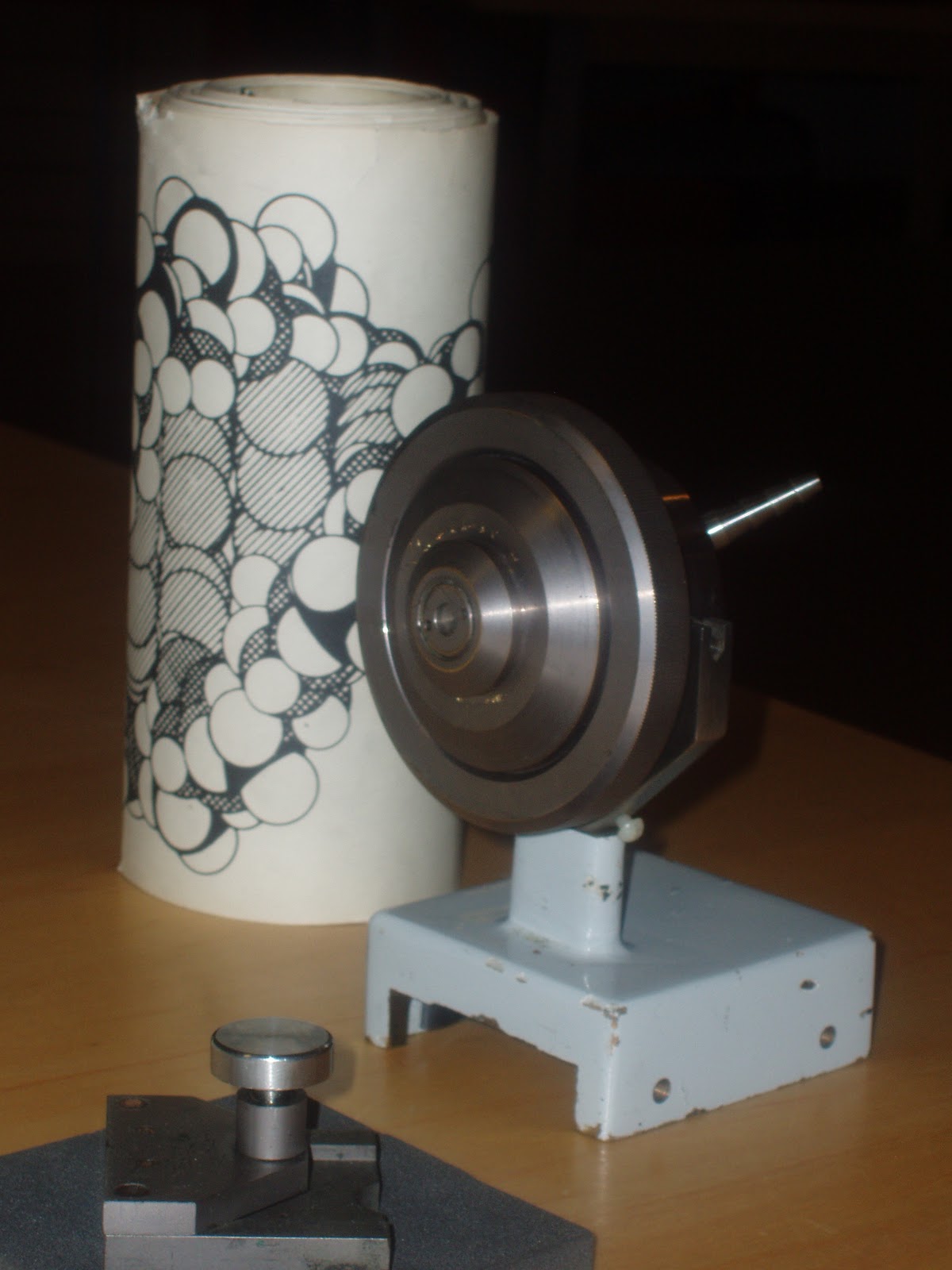
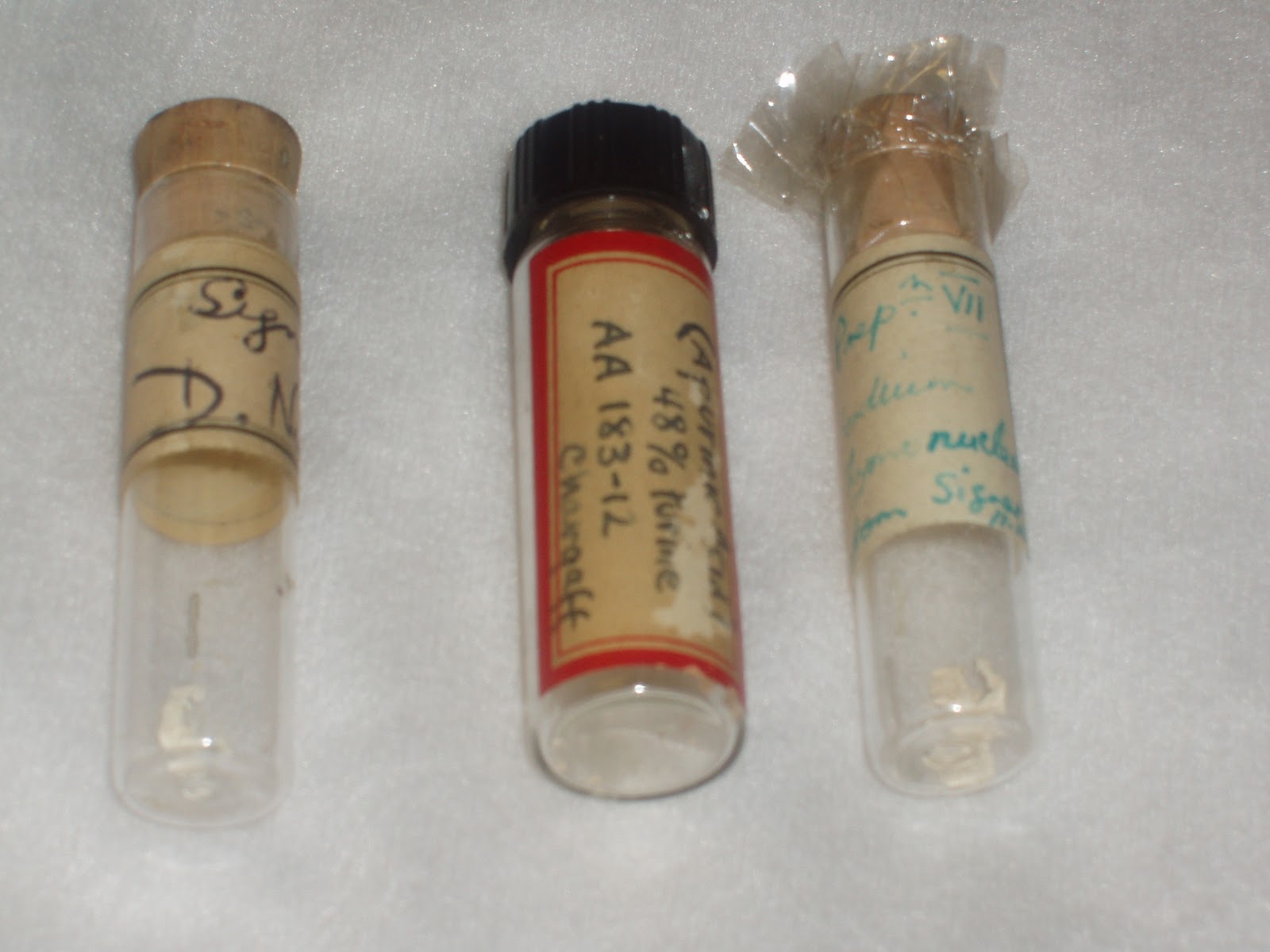
  The artefacts within the combined papers of the Maurice Wilkins and Biophysics collection include some of the most striking items in our holdings. Correspondence may have warmth and wit and the experimental notebooks may actually give the how and why but nothing beats the sheer visual punch of the DNA wire model or a X-ray diffraction camera. The artefacts are all the more impressive due to the diversity that the collection holds. Highlights include: original DNA fibres supplied by the Swiss biochemist, Rudolf Signer, which were the main source of DNA used in the X-ray diffraction experiments by Rosalind Franklin and Raymond Gosling; several X-ray diffraction cameras including the micro camera used to obtain "Photo 51", the picture of B structure DNA that so sharply showed a helical structure of DNA; DNA models and diagrams that the Biophysics Unit used to construct and refine more detailed models of DNA, with the pride and joy being the several metre long roll of the DNA molecular model ceremoniously nicknamed the "DNA toilet paper". These are a few of our favourite things and they are joined by many other items that directly relate to DNA and previous microscopic research carried out on the subject.


A few of the DNA related artefacts at King's Archives such as the single fibre X-ray camera used by Rosalind Franklin, glass vials containing original DNA samples used in the X-ray diffraction experiments, DNA diagram and Biophysics photo index


The collection has a remarkable degree of preserved DNA samples from the 1950s that not only include the Rudolf Signer Calf Thymus DNA that produced excellent B configuration X ray patterns sample but also DNA samples prepared from other scientists such as Erwin Chargaff and Leonard Hamilton which used a variety of other DNA sources like bacterial cultures and human DNA.

Image of a molecular model of DNA reproduced for the 40th anniversaryof the discovery of the double helix at King's College London

Two new Flickr sets taken from 35mm mounted slide series. Only a small sample of over thousand images that were digitally captured over the last two months. Highlights include high quality images of Rosalind Franklin, x-ray diffraction images and models of DNA and images relating to Maurice Wilkins' involvement in the Campaign for Nuclear Disarmament.

"Dear M": the transatlantic DNA collaboration of Maurice Wilkins and Leonard Hamilton

This week's post calls attention to a series of correspondence written in the 1950s that documents the DNA research carried by Wilkins and his group at King's College London from 1953 to1960. The correspondence is with Dr Leonard D Hamilton, a British medical researcher and pathologist based in the United States who worked for the Sloan Kettering Institute for Cancer Research and later the Brookhaven National Laboratory. He provided DNA samples to Wilkins at King's from 1952 into the 1960s. As my title suggests the two were firm friends and their letters are refreshingly candid. Although these letters do not document the breakthrough research on the structure of the double helix like the similar correspondence between Wilkins and Crick they do give us a good picture of how Wilkins coped with the news and life thereafter.


DNA Samples: Supply and Demand

In 1953, Leonard Hamilton became the principal provider of DNA for the King's team. Samples had previously been provided by a host of other international scientists such as Rudolf Signer, Erwin Chargaff and Harriet Ephrussi and there was a great pressure to produce better DNA samples now it had been established that DNA was the basis of genes.Wilkins and his team were also under pressure to provide a more detailed double helical model to confirm that the structure was correct and not an equally valid alternative structure.

Figure 1: Photocopy of a letter from Wilkins to Hamilton, dated 28 May 1953: Wilkins thanks Hamilton for the DNA sample taken from a mouse sarcoma and generally expresses an eagerness to press on with further DNA research.

 In the above letter, Wilkins shows his excitement over the diffraction image obtained using the S-180 mouse sarcoma sample. He also expresses the need for greater quantities and variant salts and solutions that becomes a constant theme of this correspondence, as this quotation from a letter from Wilkins on the 9 June 1954 reveals:

"As I thought I made clear, what we need is better DNAs and hence I was very disappointed to find all the samples you sent recently were no better than the usual quality. We have not the time to test laboriously numerous samples in the hope one might be good. The three dry samples were have had already and those in solution, owning to a lack of warning, arrived at this end and were held at the airport for several days and appear to have deteriorated". 

The problem of the supply of demand of DNA were exacerbated by the trans-Atlantic nature of the partnership. Communication was the biggest issue. Before the days of global mass-communication, the main medium for communication was by letter or telegram (international telephone calls had only recently been introduced and were very expensive). The frustration was felt on both sides of the Atlantic especially with the additional pressures of journal and conference deadlines. Despite these stresses, they made progress as this quote from Wilkins on 5 November 1954 states:

"The 10 week exposure came off today and is a great success. it is one of the biggest improvements we have ever had in A pictures and is very much better than the best before. Will send a copy soon and I hope I will spur you on to even better things...Good old Leonard!"


Living in the Shadow of the Watson-Crick Model

One of the reasons why these letters make compelling reading is the scattered references to the discovery of the Double Helix. In the letters we get a contemporary commentary on the initial impact of the discovery and personal opinions on some of the key characters such as Francis Crick, James Watson and Rosalind Franklin. Of particular interest is the response of Hamilton who considered that Wilkins and King's College London Biophysics Unit had been hard done by Watson and Crick's model.


Figure 2: Letter from Leonard Hamilton to Wilkins dated October 12 1954: In this letter, Hamilton describes a visit from Rosalind Franklin and also his plan to air off a little "pro-Wilkins propaganda!" at a nucleic acids conference. 
 From the correspondence, it is clear that the battles and wounds caused by the discovery are still fresh but the scientific interest in the findings ( such as the journal Scientific American in Figure 2) are already calling for a narrative of the discovery. Hamilton's repeated opposition to calling the double helix the Watson-Crick model is an example of this increasing scientific interest and his own attempts to inform the American scientific community of the role that King's Biophysics Unit played in its creation. 

Wilkins' own initial thoughts and feelings were somewhat more ambigious. For example, his assessment of Francis Crick in the letter shown in Figure 1 states:

"Taken the Watson Crick model with a grain of salt. Francis is quite certain he can solve all the problems of the universe by pure thought and his lack of facts had lost him many friends temporarily until he recovers from DNA hysteria. I am very fond of Francis but he can be a bit much at times and he can be a ruthless careerist when he thinks it suits him. but keep that quiet to ourselves. We both like him a lot so there is no harm saying this to you".

His reaction is in line with his famous letter to Crick on hearing the discovery where he called Crick and Watson a couple of "old rogues" but accepted the model gracefully. Yet in this letter he does admit a degree of resentment over the Crick's "careerist" tendencies but not enough to irreprecibly damage their friendship. 


Finals thoughts

The correspondence between these two friends is of great reading for anyone interested in the story of the double helix and the DNA research carried out at King's College London. By being both a commentary and account of the DNA research undertaken at King's in the fifties the letters acts as an informal guide to the work being carried out and excellent source of information of the different DNA salts and samples. For me, however, the best aspect of the letters is the openess and informality that Wilkins shares with his friend about his life and research.  

Figure 3: Leonard Hamilton and Maurice Wilkins together in the 1960s.


Final words

"Do please reply soon. The nature of the gene depends on it. What piffle. M"

Short and Simple (ish) Guide to X-ray Diffraction


  X-ray diffraction (or X-ray crystallography) was the chief physical method used to determine the structure of DNA. In this post, I will briefly and as simply as I can (which with my non-scientific background should not be a problem!) explain what x-ray diffraction technique is and its relative importance to the overall discovery.


What does X-ray diffraction actually mean?
 X-ray diffraction is the method of projecting a beam of X-ray radiation at a target object and through to a photographic film on the far side. A series of spots appear on the photographic film following this exposure, which is formed by the x-ray radiation diffracting off the structure that they passed through. These diffraction patterns give an indication of the general structure of the object (such as an inorganic crystal or macro- molecule such as DNA) which can then be delineated using complex mathematical formulas.

Why use X-rays in the first place?
The reason why X-ray beam is required in the first place is that atoms are too small (0.1nm between them, bearing in mind that 1 millimetre = 1000000 nanometres) to be revealed using visible light and therefore could not be viewed by a light microscope (even an electron microscope does not possess the required magnification). X-ray radiation fits the appropriate wavelength to be diffracted by the object and produce visible results.   

What causes the diffraction of the X-ray beams?
What the X-ray beam are diffracting is not the entire atom but the orbiting electrons (one of the component parts of an atom) that are close enough to the core (nucleus) of the atom to give a good indication of the structure of the unit cell (the term used for the repeating unit found in crystals and macromolecules). The end image is known as an electron density map of that unit cell. However due to the incredibly weak image a single molecule would produce, a crystalline structure is used instead, for example common salt (NaCl), since a crystalline structure provides a huge number of molecules arranged in the same orientation and therefore produces the same scattering effect on the X-ray beams. 

In this diagram, the diffraction of the X-ray beam causes an image with a helical arrangement to form as all the DNA molecules in a fibre are aligned in the same direction.


X-ray diffraction of nucleic acids at King’s College London from 1950 to 1953 
 X-ray diffraction studies on DNA began in June 1950 when Maurice Wilkins asked PhD student Raymond Gosling to assist him in diffracting the DNA fibre samples prepared by the Swiss biochemist, Rudolf Signer. Fibre diffraction did not usually provide good quality images because of the thinness of the fibres and therefore a very small mass to scatter the radiation. Nevertheless, the fibres’ remarkable uniformity when wetted allowed Wilkins to manipulate them into a bundle and mount them on a wire frame to obtain x-ray diffraction images. The initial images showed promise but Wilkins and Gosling were greatly assisted by J T Randall’s own experience with X-ray diffraction.  He advised how the surrounding air could affect the x-ray scattering. The solution was to pass hydrogen through the camera and control the relative humidity of the sample.  With this in place, the resulting images were much sharper and showed a clear crystalline diffraction pattern.
X-ray diffraction pattern obtained by M H F Wilkins and R Gosling in late 1950 showing a clear crystalline arrangement.


It was in late 1950 that the theoretical physicist Alec Stokes first noticed an interesting observation from the images. He realised that there was no diffraction at all along the length of the molecules: a sign that DNA might be helical.  However, the King’s College team needed far sharper images to confirm this hypothesis. This required a new X-ray camera that could work on single fibres.  Through a fortunate coincidence, Werner Ehrenberg and W E Spears had just developed one at Birkbeck: this was generously loaned to the King’s College team.

Before the new camera was set up, it was decided that Rosalind Franklin, who was joining the laboratory from Paris, would replace Wilkins in producing the x-ray diffraction images with the continued assistance of Raymond Gosling. Both Stokes and Wilkins continued working on the problem with the latter embarking on some rough tests with the old X-ray diffraction camera on various DNA specimens that produced an observed “X” crossed pattern. The X pattern of diffraction was created by the x-ray radiation scattering at right angles off the "zigzag" structure of the DNA chain.  This interpretation was further supported when Franklin and Gosling produced the first “B” structure X-ray patterns in the late summer of 1951. This was a crucial development as it showed two observed states of DNA: crystalline “A” and semi-crystalline “B” (the best B structure diffraction photograph became known as “Photo 51”). The photos also supported the predicted observed readings of a helix that Alec Stokes had developed using the mathematical technique known as Bessel functions.
Plot of Bessel Functions for a smooth helix, named "Waves at Bessel-on-sea" by Alec Stokes who completed the calculations for the diagram over a single train journey.


It was now Maurice Wilkins and Rosalind Franklin disagreed over the direction of the research in finding the overall structure. Wilkins was keen on hypothetical model building while Franklin favoured a more systematic study of the structure. This parting of ways can be partially explained as stemming from the limitations of the x-ray diffraction process itself. For example, the evidence from the photos clearly pointed to a helical structure but this begged question: what type of helix? Helices in nature could occur in single, double and even triple strands and there was no clear indication, which was the right number. This is why the King’s College London attempt at model building proved to be a failure when the model made by Bruce Fraser showed a triple helix based on the chemical readings but was unable to fit with the rest of the x-ray data. A crucial piece of the puzzle was missing and related closely to DNA’s function of providing the genetic material for life: it was only when Jim Watson and Francis Crick came up with the base pair hypothesis that the double helix seemed the ideal form. 


In this diagram, we can see the general similarity between a single and a double helix.


X-ray diffraction studies undertaken at King's College London provided part of the experimental structural data needed to solve the general structure of the DNA double helix. Yet, as important as these observations were other methods and disciplines were of equal importance in unravelling the overall structure, in particular the biochemical work of Erwin Chargaff and the biological insight of Jim Watson. X-ray diffraction work on DNA at King’s did not finish with the unveiling of the structure in March 1953 but continued for another decade as Wilkins and his team worked to test to the correctness of the "Watson-Crick" model.